What Rust Streamer Servers Like Rust Isles Actually Are in 2026
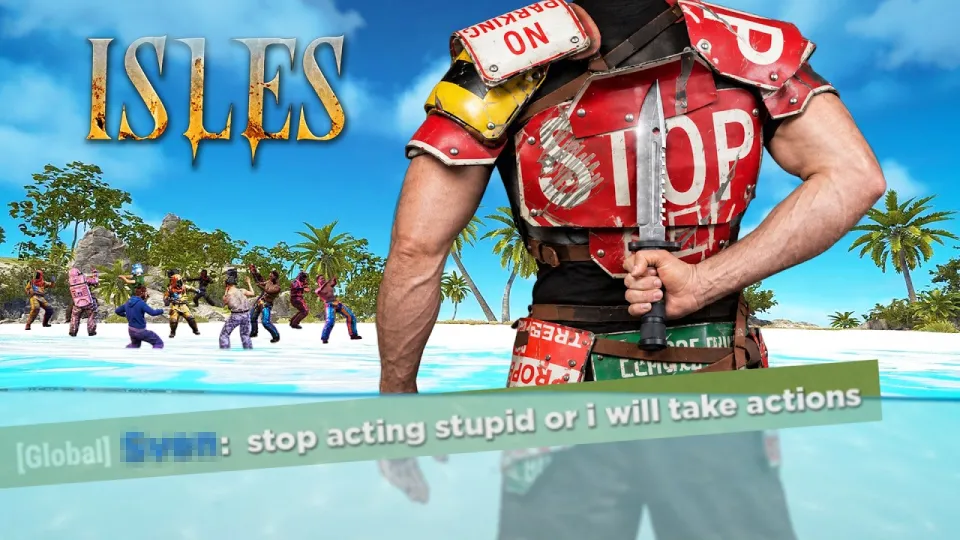
Video: Not Another Rust Streamer Server
Need articles like this for your video? They help promote it on YouTube and Google — order them in the Telegram bot @sat_sit_bot. It writes articles around your video, embeds the video and publishes them on popular niche websites (no ads). Your first 50 articles are free.
· based on the channel Stimpee
Rust streamer servers are invite-only Rust worlds where content creators, from solo survival specialists to big clan leaders, play together under constant admin supervision, and the pirate-themed Rust Isles is the latest example of the format. Stimpee documented his return to one of these servers after years away, and the result shows both what makes them entertaining and why they frustrate regular Rust players. You can follow his live sessions on his Twitch channel, where the full streamer-server chaos usually continues after the edited video ends.
What a Rust streamer server actually is
A Rust streamer server is a private, whitelisted Rust server built for content creators instead of the general public. Access is by invitation, the population is small and curated, and admins act as both moderators and event organizers. Rust Isles follows that template with a pirate theme: boats, islands, crews and a roleplay-friendly framing that encourages talking before shooting.
The appeal for viewers is that recognizable names collide. Instead of anonymous nakeds and random zergs, you get the same faces across streams, which creates continuity, rivalries and storylines. The appeal for creators is protection from the usual Rust problems: cheaters, offline raids at 4 a.m. and clans that farm for twelve hours straight. The trade-off is that almost everything interesting happens with a moderator watching.
How Rust Isles handles rules and admins
The defining feature of Rust Isles is proactive admin involvement, not just bans after the fact. Moderators on streamer servers routinely inspect inventories, remove items and intervene mid-scene when a creator is about to ruin someone else's content. In Stimpee's case that meant being watched whenever groups gathered and having weapons pulled from his inventory before he could turn a friendly meeting into a massacre.
That level of oversight exists because the server's real product is watchable content, not fair competition. A single player who treats the map as a normal Rust wipe can flatten a dozen other streams in an afternoon. Admins therefore balance in real time, which is why veteran Rust players watching these servers often describe the experience as scripted even when nothing is scripted at all.
Why clans and roleplay collide so easily
Clan recruitment on streamer servers happens fast and casually, and that is exactly where the drama starts. A crew leader invites a well-known chaotic player without asking questions, expects loyalty, then reacts badly when the new member steals a boat and strands the rest of the crew on an island. From a Rust standpoint that is ordinary survival behavior; from a roleplay standpoint it is a story beat that the other side refuses to play along with.
The pattern repeats across every streamer server: groups want the prestige of recruiting a notorious player but not the consequences. Chat arguments, accusations of betrayal and demands for admin punishment follow. The pirate theme makes this funnier, because a server built around raiding and double-crossing suddenly has an unwritten code about who is allowed to do it.
The social tone problem these servers keep running into
Streamer servers turn Rust into something closer to a social lobby than a survival game. Large groups of adults talk over each other in voice chat, treat minor theft as a personal crisis and organize gatherings that feel like a party nobody outside the guest list can attend. Viewers notice the mismatch immediately, and the running joke is that the least theatrical person in the room is often the player famous for trolling.
This is not a bug in the format so much as its core mechanic. The audience is not tuning in for efficient sulfur farming; it is tuning in for people reacting to each other. Whether that reads as entertaining or uncomfortable depends entirely on how much patience you have for manufactured conflict.
What regular Rust players can take from it
Streamer servers are a bad model for normal Rust and a useful mirror for its problems. A few practical observations carry over to public servers:
- Recruitment without screening is how clans collapse. If you invite someone based on reputation alone, expect them to act on their own interests.
- Inventory checks and admin intervention will never exist on a public server, so never rely on a moderator to save your base.
- Roleplay framing only works when both sides accept losses. If your group cannot handle a stolen boat, do not recruit a known troll.
- Offline protection and curated populations remove the pressure that makes Rust tense, which is why these servers feel like a different genre.
For solo players the takeaway is simpler: the chaos that makes streamer servers watchable is exactly the chaos you spend a wipe defending against on a real server, and the habits that protect you there, such as spreading loot and scouting before building, still matter more than any stream highlight.
Useful links
- Stimpee on Twitch for live Rust sessions and streamer-server appearances
- Stimpee on Twitter for schedule and clip announcements
- Stimpee on Instagram for short-form highlights
- Stimpee's Discord for community discussion and server news
The bottom line on Rust streamer servers
Rust streamer servers like Rust Isles are curated social experiments wrapped in survival mechanics, and they succeed as entertainment precisely because they are not fair fights. The format rewards personality over skill, admin attention over self-reliance and drama over progression, which is why reactions range from delight to secondhand embarrassment within the same clip. Stimpee's return to this world, after years away from streamer servers, captures that tension better than any explanation: a notorious player dropped into a polite playground and watched closely by moderators who know exactly what he is capable of. If you want to see how it plays out live rather than in an edited video, follow Stimpee on Twitch.
Key takeaways
- Rust streamer servers are invite-only worlds where content creators play together under heavy admin oversight
- Stimpee returned to a Rust streamer server for the first time in years via the pirate-themed Rust Isles project
- Admins routinely check his inventory and strip weapons to keep his chaos from wrecking other players' streams
- Clan leaders recruit fast and react badly to betrayal, which turns roleplay into chat arguments
- The format blends survival gameplay with VRChat-style social drama rather than classic wipe-day competition
Source: Not Another Rust Streamer Server · Markdown version
Questions & answers
Are Rust streamer servers open to regular players?
No. They are whitelisted and invite-only, built for content creators so that streams stay watchable and free of cheaters. Access usually comes through an invitation from the server owner or an existing member, not through a public application.
Why do admins on Rust Isles check players' inventories?
Because the server's purpose is producing content for many creators at once. One player with a full arsenal can end several other streams in minutes, so moderators remove weapons and intervene before a scene turns into a wipe. It is real-time balancing rather than punishment.
Is the drama on streamer servers staged?
Mostly not staged, but heavily shaped by the environment. Invite-only populations, roleplay framing and constant admin presence push players into social situations they would never reach on a public server, so conflicts look scripted even when they are spontaneous.
Do streamer servers teach anything useful for normal Rust?
They are a poor model for progression and combat but a good lesson in group dynamics. Recruiting without screening, trusting strangers with shared loot and expecting fairness from strangers are the same mistakes that destroy clans on public servers every wipe.